- pjiphi.jpg
Welcome to Hoboya Phuket!
- divinglicens.jpg
#1 in Licensed Certifications – Dive with Confidence!
- whale shark.jpg
Daily Fun Dives in Four Amazing Directions
- mantaray.jpg
Spot Manta Rays Here in Phuket!
- nemo.jpg
Meet Nemo on Our Popular Trial Dives
- divingboat.jpg
Connect with Fellow Ocean Lovers


Overview of Phuket Island
One of Asia's Top Resorts
Extending like an elephant's trunk from mainland Thailand, the Malay Peninsula opens to the Andaman Sea on its western coast, renowned for its beautiful waters.
Phuket Island, floating in the Andaman Sea, stretches about 50 km north to south and 21 km east to west, covering an area of 543 km².
Surrounded by 32 smaller islands, it is known as the "Pearl of the Andaman Sea" and is the largest island in Thailand. Phuket is also the country's most developed beach resort.
Its waters extend from the Andaman Sea to the Indian Ocean, offering stunning blue seas during the high season.
Phuket is separated from the mainland by a narrow channel but connected via the Sarasin Bridge, allowing easy overland travel from the Malay Peninsula. Supplies and tourists alike cross this bridge to enter Phuket.
The island developed in the 16th century as Portuguese traders visited, and Chinese merchants arrived seeking tin and rubber. In Phuket Town, remnants of Portuguese-style architecture remain, and a significant number of Sino-Thai residents live there.
Until around the 1970s, Phuket was relatively unknown as a tourist destination, but European backpackers gradually spread word of its beauty. By the 1980s, hotel and infrastructure development accelerated, and within a decade, Phuket became one of Asia's premier resort islands, attracting millions of tourists annually.
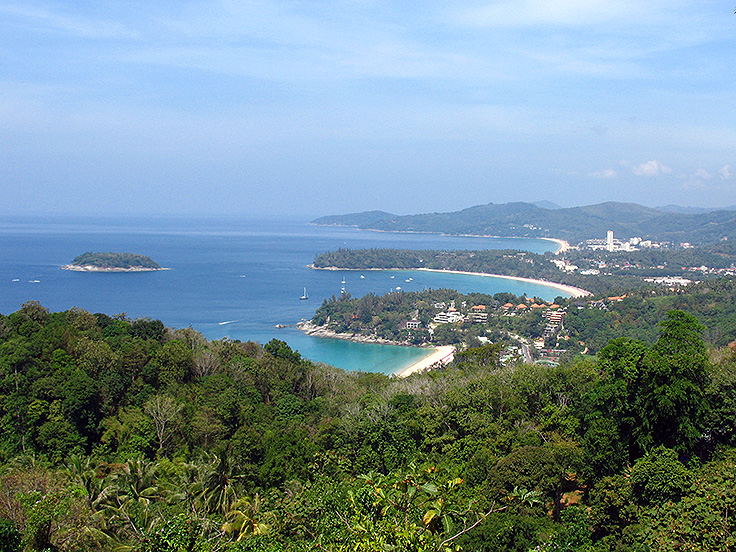
Phuket Enjoyable for All Ages
Compared to other regions in Thailand, Phuket has well-developed roads and infrastructure, allowing visitors to feel almost like they are in Japan. Main roads are wide and well-constructed, making it easy to explore the island by car.
Patong Beach is the busiest tourist area on the island, offering a wide variety of activities from morning to night. A 20-minute boat ride from Patong leads to quiet, uninhabited beaches.
Phuket offers luxury hotels over $300 per night, as well as budget accommodations for around $15 per night in more remote areas. With its diverse beaches and regions, the island caters to all ages, from young travelers to families and seniors.
Phuket’s appeal as a beach resort makes it comparable to a tropical paradise in Asia.
The east side of Phuket faces the smaller islands of the Phuket Sea, with Krabi across the water and Phi Phi Islands in between. The west side faces the Andaman Sea with waves from the Indian Ocean. Most popular resorts are on the west coast, including Patong and Kata Beaches, bustling year-round with shopping, dining, and nightlife.
On the east coast, Phuket Town hosts government offices, post offices, and harbors, along with charming fishing villages. Compared to the west, this side is quieter, and Phuket Town is a hub of local life with shopping centers and various shops.